
Views: 0 Author: Site Editor Publish Time: 2026-11-09 Origin: Site
A mini food processor suits small jobs like chopping herbs or garlic in a compact bowl, an electric food processor offers more power for everyday chopping and mincing tasks, and a multifunction food processor combines chopping, blending, juicing, and more in one machine. Choose based on how much counter space you have, how often you cook, and how many separate appliances you want to replace.
Shopping for a food processor can feel more complicated than it should be. Walk into any kitchen appliance aisle, or scroll through an online store, and you'll find dozens of models labeled "mini," "electric," "professional," or "multifunction"—often with little explanation of what actually separates them. If you've ever wondered whether you need a compact chopper for weeknight dinners or a heavy-duty machine that can juice, blend, and knead dough, you're not alone.
This guide breaks down three common categories of food processors: the mini food processor, the electric food processor, and the multifunction food processor. We'll look at their wattage, bowl capacity, blade design, and best use cases, so you can match the right machine to your cooking habits instead of guessing.
A mini food processor is a compact kitchen appliance designed for small-batch chopping and cutting. It's built for tasks like mincing garlic, chopping fresh herbs, or cutting hard cheese into small pieces—jobs that don't require a large bowl or heavy-duty motor.
Take the YT-CP07, a mini food chopper built with a 300W motor and a stainless steel bowl ranging from 1.2L to 1.8L, depending on the configuration. It runs on 100-240V AC power at 50/60Hz, which makes it usable in most regions without a converter. Its stainless steel double blade handles fruits, vegetables, herbs, and hard cheese with a low-noise motor that maintains constant power throughout the chopping cycle.
Choose a mini food processor if you cook for one or two people, have limited counter or storage space, or mainly need help with prep tasks like finely chopping onions or making a quick pesto. It's not designed for heavier jobs like kneading dough or juicing fruit.
An electric food processor typically steps up in power and versatility compared to a mini chopper, while still staying compact enough for everyday countertop use. The YT-R68, for example, is marketed as a professional electric food processor and mini chopper, and it runs on a 500W motor—noticeably stronger than the 300W mini chopper.
The YT-R68 includes a 350ml chopping cup alongside a 1.0L blender jar, giving it dual functionality: chop smaller ingredients like garlic and herbs in the cup, then switch to the jar for blending tasks. It features a stainless steel blade, an on/off button with a safety switch, and anti-slip rubber feet to keep it steady during use. Like the mini chopper, it handles fruits, vegetables, herbs, and hard cheese, but its added power and blending jar make it suitable for slightly bigger or tougher jobs.
Choose an electric food processor over a mini chopper if you want more power for denser ingredients, need a blending function in addition to chopping, or cook for a slightly larger household.
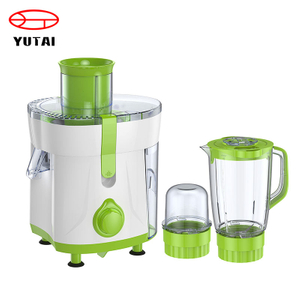
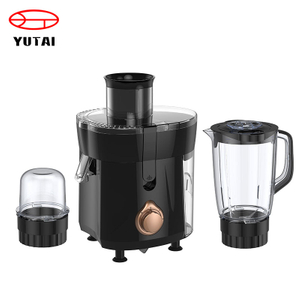
A multifunction food processor consolidates several kitchen tools into a single machine. Instead of owning a separate chopper, juicer, blender, and dough mixer, you get all of these functions built into one base unit with interchangeable attachments.
The YT-2201 illustrates this well. It's available in two configurations—3-in-1 or 10-in-1—built around a 500W motor running on 100-240V AC power. In its 3-in-1 setup, it functions as a juicer, blender (with 1500ml capacity), and grinder. Upgrade to the 10-in-1 configuration, and it adds chopping, shredding, slicing, granulating, kneading, emulsifying, citrus pressing, and an optional filter attachment.
It comes with a 1000ml capacity bowl that includes a handle and feeding chute for easier food loading, plus a 600ml juice jug for the juicing function. Stainless steel blades are designed to prepare food quickly, and a rotary switch offers two speeds plus a pulse setting for more control over texture. Like the other two models, it includes anti-slip rubber feet and an easy-to-clean base and jar.
Choose a multifunction food processor if you want to reduce the number of appliances cluttering your kitchen, regularly prepare a wide variety of foods (from juice to dough to shredded vegetables), or cook for a larger household that benefits from bigger bowl and jug capacities.

Feature | Mini Food Processor (YT-CP07) | Electric Food Processor (YT-R68) | Multifunction Food Processor (YT-2201) |
|---|---|---|---|
Motor power | 300W | 500W | 500W |
Voltage | 100-240V AC, 50/60Hz | 100-240V AC, 50/60Hz | 100-240V AC, 50/60Hz |
Bowl/container capacity | 1.0L–1.8L stainless steel or glass bowl (model dependent) | 350ml chopping cup + 1.0L blender jar | 1000ml bowl + 600ml juice jug |
Blade type | Stainless steel double blade | Stainless steel blade | Stainless steel blades |
Core functions | Chopping, cutting | Chopping, cutting, blending | Chopping, blending, juicing, grinding, shredding, slicing, kneading, emulsifying, citrus pressing (10-in-1 configuration) |
Speed settings | Single-speed with safety switch | Single-speed with safety switch | Two speeds plus pulse |
Best for | Small-batch herb and garlic prep, compact kitchens | Everyday chopping with light blending needs | Households wanting one machine for multiple food prep tasks |
Here's how to decide between the three, based on what matters most to you:
Choose a mini food processor if counter space is tight and your prep work rarely goes beyond chopping herbs, garlic, or small amounts of vegetables.
Choose an electric food processor if you want more motor power than a mini chopper offers, plus a blending jar for smoothies or sauces, without stepping up to a full multifunction system.
Choose a multifunction food processor if you're willing to invest in one larger machine that replaces a juicer, blender, chopper, and dough mixer, and you have the storage space for its larger bowl and jug components.
Wattage is one of the clearest indicators of capability. A 300W motor, like the one in the YT-CP07, is well-suited to soft ingredients and small quantities. The 500W motors found in both the YT-R68 and YT-2201 can handle tougher or larger batches of food, which matters if you're processing dense vegetables or kneading dough.
The right food processor comes down to matching the machine's capability to how you actually cook. A mini food processor keeps things simple for quick, small tasks. An electric food processor adds power and a blending function for slightly bigger jobs. A multifunction food processor consolidates multiple appliances into one unit for households that want maximum versatility from a single machine.
Before you decide, think through your typical cooking routine: How often do you chop versus blend versus juice? How much storage space do you have for the bowl, jug, and extra attachments? Answering these questions first will make it much easier to land on the model that actually fits your kitchen.
What is the main difference between a mini food processor and a regular electric food processor?
A mini food processor, like the YT-CP07, uses a smaller 300W motor and is built mainly for chopping small quantities of herbs, garlic, or vegetables. A regular electric food processor, like the YT-R68, uses a stronger 500W motor and adds a blending jar alongside its chopping cup, making it suitable for slightly bigger or more varied tasks.
Can a multifunction food processor replace a separate juicer and blender?
Yes. The YT-2201, for example, offers a 3-in-1 configuration that includes juicing, blending, and grinding functions, or a 10-in-1 configuration that adds chopping, shredding, slicing, kneading, and more. This design is meant to reduce the need for separate single-purpose appliances.
Is a higher wattage always better for a food processor?
Not necessarily. Higher wattage, such as the 500W motors in the YT-R68 and YT-2201, generally handles denser ingredients and larger batches more efficiently. But if you only need to chop small amounts of herbs or garlic, a 300W mini food processor like the YT-CP07 may be all you need, without paying for power you won't use.
What should I check before buying a food processor?
Look at motor wattage, bowl or jug capacity, blade material, and how many functions the machine offers. Also consider how much counter and storage space you have, since multifunction models with multiple attachments typically take up more room than a compact mini chopper.
Are these food processors suitable for both home and professional use?
The YT-CP07 is designed primarily for home use and small-batch prep. The YT-R68 is marketed as a professional electric food processor, suggesting it can handle more frequent or demanding use. The YT-2201's multifunction design, with its two-speed and pulse settings, also supports a wider range of food prep tasks in both home kitchens and smaller commercial settings.