
Views: 0 Author: Site Editor Publish Time: 2026-10-13 Origin: Site
A centrifugal juicer extracts juice fast by shredding produce and spinning out the liquid, making it ideal for quick morning juice with minimal pulp separation effort. A juicer blender blends whole fruits and vegetables into a thicker, fiber-rich drink and often doubles as a smoothie maker. Choose a centrifugal juicer for speed and clear juice; choose a juicer blender if you want fiber retention, versatility, and portability.
Choosing between a centrifugal juicer and a juicer blender comes down to one question: what do you actually want out of your glass? Some people want pure, smooth juice in under a minute. Others want a thicker, fiber-packed drink that doubles as a meal replacement. Both machines can turn fresh produce into something drinkable, but they go about it in very different ways.
This guide breaks down how each appliance works, where they shine, and which one makes sense for your lifestyle. We'll also look at portable juice blenders, a growing category for anyone who wants fresh juice without being tied to a countertop machine.
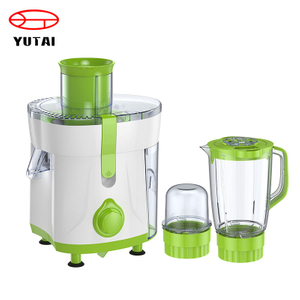
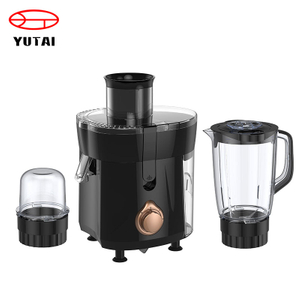
A centrifugal juicer uses a fast-spinning metal blade to shred fruits and vegetables against a mesh filter. Centrifugal force then separates the juice from the pulp, pushing liquid through the filter while pulp collects separately. The entire process typically takes 30 to 60 seconds per serving.
This method works best with harder produce like apples, carrots, and celery. Leafy greens tend to yield less juice in a centrifugal juicer because the high-speed spinning doesn't break down soft fibers as efficiently as slower extraction methods.
Advantages of a centrifugal juicer:
Fast processing, usually ready in under a minute
Easier cleanup thanks to wider feed chutes that need less pre-cutting
Lower price point compared to masticating or cold-press models
Produces thinner, clearer juice with minimal pulp
Trade-offs to consider:
Heat and oxidation from fast spinning can reduce some nutrient content
Less effective with leafy greens and soft fruits
Can be louder during operation
A juicer blender processes whole produce by blending it into a liquid without separating out the pulp. Instead of filtering juice from fiber, it keeps everything together, resulting in a thicker drink similar to a smoothie. Some juicer blenders include a built-in strainer attachment, giving you the option to blend with pulp or strain it out afterward.
This category also includes an emerging segment: the portable juice blender. These compact, often USB-rechargeable blenders are designed for single servings, making them popular for desks, gyms, and travel. A portable juice blender won't replace a full-size appliance for high-volume juicing, but it's a convenient option for someone who wants a quick smoothie without hauling out a bulky machine.
Advantages of a juicer blender:
Retains fiber, which supports digestion and slows sugar absorption
Versatile enough to handle smoothies, purees, and sauces
Portable juice blender models are compact and easy to transport
Often more affordable for single-serving use cases
Trade-offs to consider:
Thicker texture isn't for everyone
Full-size models can be bulkier to store than centrifugal juicers
Portable juice blenders have smaller capacity, limiting batch size

Feature | Centrifugal Juicer | Juicer Blender |
|---|---|---|
Processing speed | Fast (30–60 seconds) | Fast (30–90 seconds) |
Texture of output | Thin, pulp-free juice | Thick, fiber-rich drink |
Best for | Hard produce (apples, carrots) | Fruits, vegetables, smoothies |
Fiber content | Low (pulp removed) | High (fiber retained) |
Portability | Typically countertop only | Available in portable models |
Cleanup | Moderate (filter basket) | Easy (fewer parts in compact models) |
Price range | Budget to mid-range | Budget to mid-range |
Noise level | Higher | Moderate |
Choose a centrifugal juicer if you prioritize speed and a traditional juice bar experience. It's a strong fit for households that juice hard fruits and vegetables regularly and don't mind separating out the pulp. Shoppers exploring large-capacity options, like a large-caliber electric centrifugal juicer, often want higher juice yield per batch, which centrifugal models are built to deliver.
Choose a juicer blender if you value nutrition retention and multi-use functionality. A kitchen appliance that handles both smoothies and light juicing, such as a juicer blender kitchen appliance, gives you more flexibility without needing two separate machines.
If slower extraction and maximum nutrient preservation matter most to you, a cold-press option like an electric slow juicer with a wide feed chute is worth comparing as well. Cold-press machines operate at lower speeds than centrifugal juicers, which can reduce oxidation and heat exposure during extraction.
For anyone short on counter space or juicing on the go, a portable juice blender solves the storage problem entirely. These compact models are designed for single servings and typically charge via USB, so you can blend a quick juice at your desk or take it with you during travel.
There's no universally "better" option between a centrifugal juicer and a juicer blender. It depends on your priorities: speed and clarity versus fiber and flexibility. If you juice daily and want results fast, a centrifugal juicer earns its place on the counter. If you want a drink that doubles as a light meal and don't mind a thicker texture, a juicer blender is the more practical pick. And if portability tops your list, a portable juice blender fills a gap that neither full-size appliance covers well.
Think about how often you'll use the machine, what produce you'll juice most, and how much counter or storage space you have. Matching the appliance to your actual routine, rather than chasing the most feature-packed model, is what leads to a juicer you'll actually use.
Is a centrifugal juicer or a juicer blender better for weight loss?
A juicer blender retains fiber, which can help with satiety and slower sugar absorption, making it a better fit for weight management goals. A centrifugal juicer removes pulp, so the resulting juice is lower in fiber but still provides vitamins and hydration.
How much does a centrifugal juicer typically cost compared to a juicer blender?
Both categories span a wide price range, from budget-friendly countertop models to higher-end versions with larger capacities. Portable juice blenders tend to sit at the lower end of the price spectrum due to their smaller size and simpler design.
Can a portable juice blender replace a full-size juicer?
A portable juice blender works well for single servings and on-the-go use, but it isn't designed for high-volume juicing. If you regularly juice for a family or batch-prepare juice for the week, a full-size centrifugal juicer or juicer blender will serve you better.
Is cleanup easier with a centrifugal juicer or a juicer blender?
Juicer blenders, especially compact and portable models, generally have fewer parts and are easier to clean. Centrifugal juicers include a mesh filter basket that requires more thorough cleaning to prevent pulp buildup.
Which option retains more nutrients, a centrifugal juicer or a cold-press juicer?
Cold-press juicers operate at slower speeds with less heat and oxidation, which can help preserve more nutrients than a centrifugal juicer. If nutrient retention is your top priority, a slow or cold-press model is worth considering alongside a centrifugal option.