
Views: 0 Author: Site Editor Publish Time: 2026-09-20 Origin: Site
A food processor is one of the most versatile kitchen appliances, handling chopping, slicing, grinding, and kneading in a single unit. For businesses and bulk buyers, choosing between a compact multifunction food processor, a stainless steel blender, or a commercial food processor depends on production volume, durability needs, and budget. Buyers sourcing from manufacturers should prioritize wattage, jar material, safety certifications, and MOQ terms.
Kitchen appliance retailers and distributors face a crowded market of blenders, mixers, and processors that all promise to do everything. Sorting through wattage specs, jar materials, and function counts can feel overwhelming, especially when sourcing directly from manufacturers for resale or private labeling. This guide breaks down what actually matters when evaluating a food processor, how it compares to a stainless steel blender, and when a commercial food processor makes more sense than a household model.
Whether you're stocking a retail shelf, outfitting a commercial kitchen, or sourcing private-label kitchen appliances for your own brand, understanding these distinctions will help you make a confident purchasing decision.
A food processor is a multifunction kitchen appliance built around a motorized base, a mixing bowl, and interchangeable blades or discs. Unlike a standard blender, which is optimized for liquids, a food processor is designed for dry and semi-solid tasks like chopping, shredding, slicing, grinding, and kneading dough.
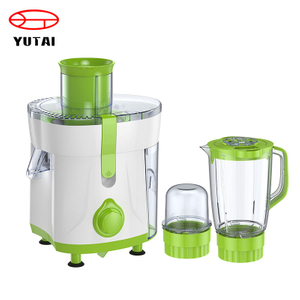
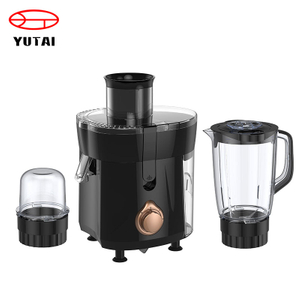
Many modern units on the market combine 7 to 10 functions into one machine. For example, a 10-in-1 food processor typically includes blending (often with a 1800ml jar), grinding, and filtering, alongside chopping, shredding, slicing, granulating, kneading, emulsifying, and citrus pressing. These units usually run on stainless steel blades, feature a 1000ml capacity bowl with a feeding chute, and offer two-speed rotary switches with a pulse function.
Housing material is worth checking closely. Some models use stainless steel housing, while more budget-friendly versions offer plastic housing as an optional alternative. If you're sourcing for a market segment that values durability and premium appearance, stainless steel housing is generally the stronger choice.
This is one of the most common points of confusion for both retailers and end customers. Here's a side-by-side comparison to clarify where each appliance excels:
Feature | Food Processor | Stainless Steel Blender |
|---|---|---|
Primary use | Chopping, slicing, shredding, kneading | Blending liquids, smoothies, purees |
Typical jar material | Plastic or stainless steel bowl | Glass jar with stainless steel middle jar (in premium models) |
Motor power | 500W–5000W depending on model | 350W–800W typical range |
Speed settings | 2 speeds plus pulse (common) | 3–5 speeds plus pulse |
Best for | Solid food prep, dough, purees | Smoothies, shakes, ice crushing |
Housing options | Plastic or stainless steel | Stainless steel body common in premium lines |
A stainless steel blender, such as a 350W model with a 1.5L clear glass jar and stainless steel middle jar, is built for liquid-forward tasks: smoothies, shakes, and soups. It typically includes three speeds and a pulse switch, along with certifications like CE, CB, CSA, EMC, EMF, ETL, GS, LFGB, RoHS, SASO, UL, and UR, depending on the target export market.
If your customers need both functions, some manufacturers offer combo units that blend and process in one housing, which can simplify inventory for retailers stocking multifunction kitchen appliances.

A commercial food processor is built for higher-volume, higher-frequency use than a household model. These units typically feature significantly higher wattage, sometimes reaching 5000W, along with reinforced housing and heavier-duty motors designed to withstand continuous operation in restaurants, catering businesses, or food production facilities.
Choose a commercial food processor if your buyer profile includes:
Restaurants or catering companies processing large batches daily
Food production businesses needing consistent, repeated performance
Retailers targeting the HORECA (hotel, restaurant, catering) segment
Choose a standard household food processor if your buyer profile includes:
Home cooks and small households
Retailers focused on consumer kitchen appliances rather than foodservice equipment
Budget-conscious markets where price sensitivity outweighs heavy-duty durability
The decision ultimately comes down to duty cycle. A household unit designed for occasional use will wear out quickly under commercial demands, while a commercial-grade motor may be unnecessarily expensive for light home use.
For distributors and private-label buyers sourcing food processors, blenders, and hand mixers directly from manufacturers, a few factors consistently separate a good sourcing decision from a costly mistake:
Certifications: Look for CE, CB, RoHS, and GS certifications at a minimum. Export-focused manufacturers serving markets like South America, the Middle East, Europe, and Southeast Asia often carry a broader certification set, including UL, ETL, and SASO for specific regional compliance.
MOQ and production timelines: Minimum order quantities for kitchen appliances commonly sit around 1,000 pieces per item, with production timelines of 45 to 55 days after deposit and artwork confirmation. Factor this lead time into your inventory planning.
Payment terms: T/T, L/C, and Trade Assurance are standard payment structures offered by established manufacturers.
Sample availability: Reputable manufacturers typically provide free samples, with the buyer covering freight costs. Always request a sample before committing to a bulk order, especially for private-label branding.
Factory scale and capacity: A manufacturer's factory size and workforce can indicate production reliability. Facilities spanning around 30,000 square meters with 400 to 500 workers suggest established, scalable operations capable of handling recurring bulk orders.
It's tempting to prioritize the appliance with the most functions listed on the box. But more functions don't always mean better value for your customers. A 10-in-1 food processor with thin plastic components may underperform compared to a simpler 5-in-1 unit built with stainless steel blades and a sturdier housing.
When evaluating kitchen appliances for your product line, weigh function count against build materials, motor wattage, and warranty or certification support. A product with fewer functions but higher build quality often earns better customer reviews and fewer returns, which matters more for long-term brand reputation than a longer feature list.
Choosing the right food processor, stainless steel blender, or commercial food processor comes down to understanding your end customer's actual use case rather than chasing the highest function count or lowest price point. Match motor power and build quality to duty cycle, confirm certifications match your target export markets, and always request samples before placing a bulk order.
If you're evaluating suppliers for your next kitchen appliance line, request product specification sheets and certification documentation upfront. This step alone can save significant time and prevent costly compliance issues down the line.
What's the difference between a food processor and a blender?
A food processor handles solid and semi-solid food prep tasks like chopping, slicing, and kneading, while a blender is optimized for liquids like smoothies and purees. Some multifunction units combine both capabilities.
How much does a commercial food processor typically cost to source?
Pricing varies significantly by wattage, materials, and order volume, but bulk sourcing typically requires a minimum order quantity of around 1,000 units per item. Contact manufacturers directly for current per-unit pricing based on your specifications.
What certifications should a kitchen appliance have for export?
At minimum, look for CE, CB, RoHS, and GS certifications. Depending on your target market, additional certifications like UL, ETL, CSA, or SASO may be required for regulatory compliance.
How long does production take after placing a bulk order?
Most manufacturers require approximately 45 to 55 days for production after receiving a deposit and confirming artwork or branding details.
Is stainless steel housing worth the added cost over plastic?
For markets where durability and premium appearance drive purchasing decisions, stainless steel housing typically justifies the added cost through longer product lifespan and stronger perceived value.