
Views: 0 Author: Site Editor Publish Time: 2026-09-07 Origin: Site
A portable blender juicer lets you blend fresh juice and smoothies anywhere — no outlet required. The best models combine USB rechargeability, compact design, and enough motor power to handle whole fruits. This guide covers how portable blenders compare to centrifugal juicers, what to look for, and how to choose the right model for your needs.
Fresh juice on your commute. A post-gym smoothie blended at the park. A quick fruit drink at your desk without hauling out a full-sized appliance. Portable blender juicers make all of this possible — and the category has grown significantly as more people prioritize convenient, healthy habits outside the kitchen.
But not all portable blenders are the same. Some are best for soft fruits and smoothies. Others handle harder produce with ease. And the difference between a centrifugal juicer and a fresh juice portable blender matters more than most buyers realize before they purchase.
This guide breaks down everything you need to know: how the technology works, how different types compare, what specs actually matter, and what to expect from a portable juice blender factory like HomeMaster — a manufacturer with over ten years of experience producing certified, export-grade kitchen appliances.
A portable blender juicer is a compact, battery-powered device that blends whole fruits and vegetables into fresh juice or smoothies. Unlike traditional countertop blenders, portable models are designed to be self-contained. The jar, blades, and motor base travel together — often small enough to fit in a gym bag.
Most portable juice blenders today are USB rechargeable, meaning you charge them like a phone and take them anywhere. A fully charged unit can typically complete multiple blending cycles before needing a recharge. For example, HomeMaster's YT-Y55 personal blender delivers up to 15 blending cycles on a single charge from its 1500mAh dual battery, running at 30W with a 300ml Tritan or glass jar.
The blades do most of the work. High-quality portable blenders use durable stainless steel cross-blades that can break down fibrous fruits and leafy greens quickly. Most run on a simple on/off mechanism — some include 20-second auto-stop programs that blend and halt automatically, making the process nearly effortless.
This is one of the most common questions buyers ask — and the answer shapes which product is right for you.
Feature | Portable Blender Juicer | Best Centrifugal Juicer |
|---|---|---|
Mechanism | Blends whole fruit, retains fiber | Spins at high speed, separates juice from pulp |
Output | Thick smoothie or blended juice | Clear, pulp-free fresh juice |
Portability | Highly portable, USB rechargeable | Countertop-based, requires power outlet |
Nutrient Retention | Retains fiber and most nutrients | Fast extraction, some oxidation |
Ease of Cleaning | Simple, rinse-and-go | More components to disassemble |
Best For | On-the-go smoothies, travel, gym use | Home kitchen, high-volume juicing |
Power | 30W–250W (battery-powered) | 400W+ (plug-in) |
Jar Capacity | 300ml–1000ml | 1L–1.5L+ |
Choose a portable blender juicer if convenience and portability matter more than pulp-free juice. It's the better option for daily smoothies, travel, and gym use.
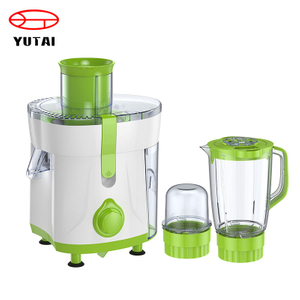
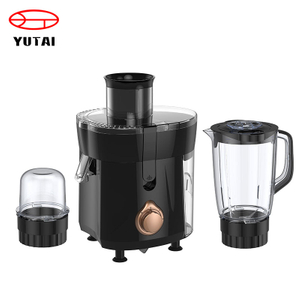
Choose a centrifugal juicer if you want cleaner, pulp-free fresh juice and plan to juice large batches at home. HomeMaster's centrifugal juicer range, for instance, handles high-volume extraction with wider feed chutes and powerful motors suited to a kitchen countertop setup.
Not every portable blender delivers the same results. Here are the specifications that actually matter when comparing models.
Power determines how well the blender handles tough ingredients. A 30W motor works well for soft fruits, leafy greens, and pre-cut produce. For harder items like frozen fruit, carrots, or ice, look for higher wattage. HomeMaster's portable range spans from 30W personal blenders up to 250W electric shaker cup models — giving buyers clear options based on their typical ingredients.
The most common sizes are:
300ml–350ml — single-serving smoothies, ideal for gym bags and travel
600ml — larger personal portions, good for meal prep on the go
1000ml — high-capacity portable blending, suitable for sharing or longer trips
HomeMaster offers models across all three ranges, including a 300ml Tritan jar option (BPA-free) and a 1000ml USB rechargeable model for users who need more volume without giving up portability.
Yes. Tritan plastic is the most popular choice for portable blenders — it's lightweight, shatter-resistant, and BPA-free. Glass jars are heavier but preferred by users who want to avoid plastic contact with acidic juices. Many HomeMaster models offer both options within the same product line, letting buyers choose based on their preference.
For safety and market compliance — especially for buyers sourcing wholesale or importing — certifications matter. HomeMaster portable blenders carry CE, CB, RoHS, GS, and several other international certifications including ETL and UL for the US market. This makes them suitable for distribution across South America, Europe, the Middle East, and Southeast Asia.
For retailers, importers, and private-label brands, working directly with a portable juice blender factory offers clear advantages over sourcing through intermediaries.
HomeMaster — Jiangmen HomeMaster Electric Motors & Appliances Manufacturing Co., Ltd. — operates a 30,000 square meter facility in Guangdong, China, with an in-house injection workshop, motor workshop, and dedicated R&D department. The factory employs 400–500 workers and holds ISO9001 certification.
Key factory sourcing details:
MOQ: 1,000 units per item
Lead time: 45–55 days after deposit and artwork confirmation
Payment terms: T/T, L/C, and Trade Assurance
Samples: Available (freight cost borne by buyer)
Custom development: R&D team supports product customization
For buyers who need a reliable supply chain for portable juice blenders, centrifugal juicers, or fresh juice blender products, working directly with an ISO-certified manufacturer removes unnecessary margin layers and provides greater quality control.
Portable blenders fit naturally into specific lifestyles and routines. Here's where they deliver the most value:
Gym and fitness: Blend a protein-and-fruit smoothie right after a workout, without carrying a separate shaker
Office use: Keep a charged blender at your desk for a mid-morning juice without leaving your floor
Travel: USB charging means you can power up from a laptop, power bank, or hotel USB port
Outdoor activities: Hiking, camping, or beach days — anywhere a power outlet is unavailable
Meal prep: Small-batch blending for single servings without dirtying a full countertop blender
A few simple practices extend the life and performance of any portable juice blender:
Cut produce into smaller pieces before blending — this reduces strain on the motor and blades
Add liquid first (water, coconut water, or juice) before adding solid ingredients
Rinse immediately after use — the 20-second auto-blend cycle on many models works well for self-cleaning with water and a drop of soap
Charge fully before extended use — a full charge gives maximum blending cycles
Avoid overfilling — stay within the max fill line to prevent leaks and motor strain
Portable blender juicers have moved well beyond novelty status. For everyday consumers, they solve the real problem of eating and drinking well when life doesn't happen near a kitchen. For wholesale buyers and distributors, they represent one of the fastest-moving categories in small kitchen appliances — with demand across health-conscious markets worldwide.
If you're looking for a reliable portable juice blender factory with a proven export track record, international certifications, and a broad product catalog spanning portable blenders, centrifugal juicers, and fresh juice blender models, HomeMaster is worth contacting directly at jmhomemaster.com.

A portable blender blends whole fruit into a smoothie, retaining fiber. A portable juicer — particularly a centrifugal juicer — extracts liquid and separates the pulp, producing clearer juice. Portable blender juicers combine both functions in a compact form, though the output is typically a blended juice rather than a pulp-free extract.
This depends on battery capacity and motor wattage. HomeMaster's YT-Y55 personal blender, for example, delivers up to 15 blending cycles per full charge using a dual 1500mAh battery at 3.7V/30W.
Yes, provided the jar material is appropriate. Tritan plastic and glass jars are both safe for use with acidic fruits like citrus, pineapple, and berries. Avoid standard plastic jars for highly acidic blends over extended periods.
HomeMaster's MOQ is 1,000 units per item. Samples are available prior to bulk orders, with buyers covering freight costs.
HomeMaster's standard lead time is 45–55 days after the deposit is received and artwork is confirmed. This timeline applies across their portable blender and juicer product lines.
For international distribution, look for CE (Europe), CB, RoHS, GS, ETL, and UL (US market) certifications. HomeMaster portable blenders carry all of these, making them suitable for export across major global markets.